Problem Context
Time was being lost not in patient care, but in navigating supply fragmentation.
Research identified two systemic breakdowns:
1. Visual & Organizational Fragmentation
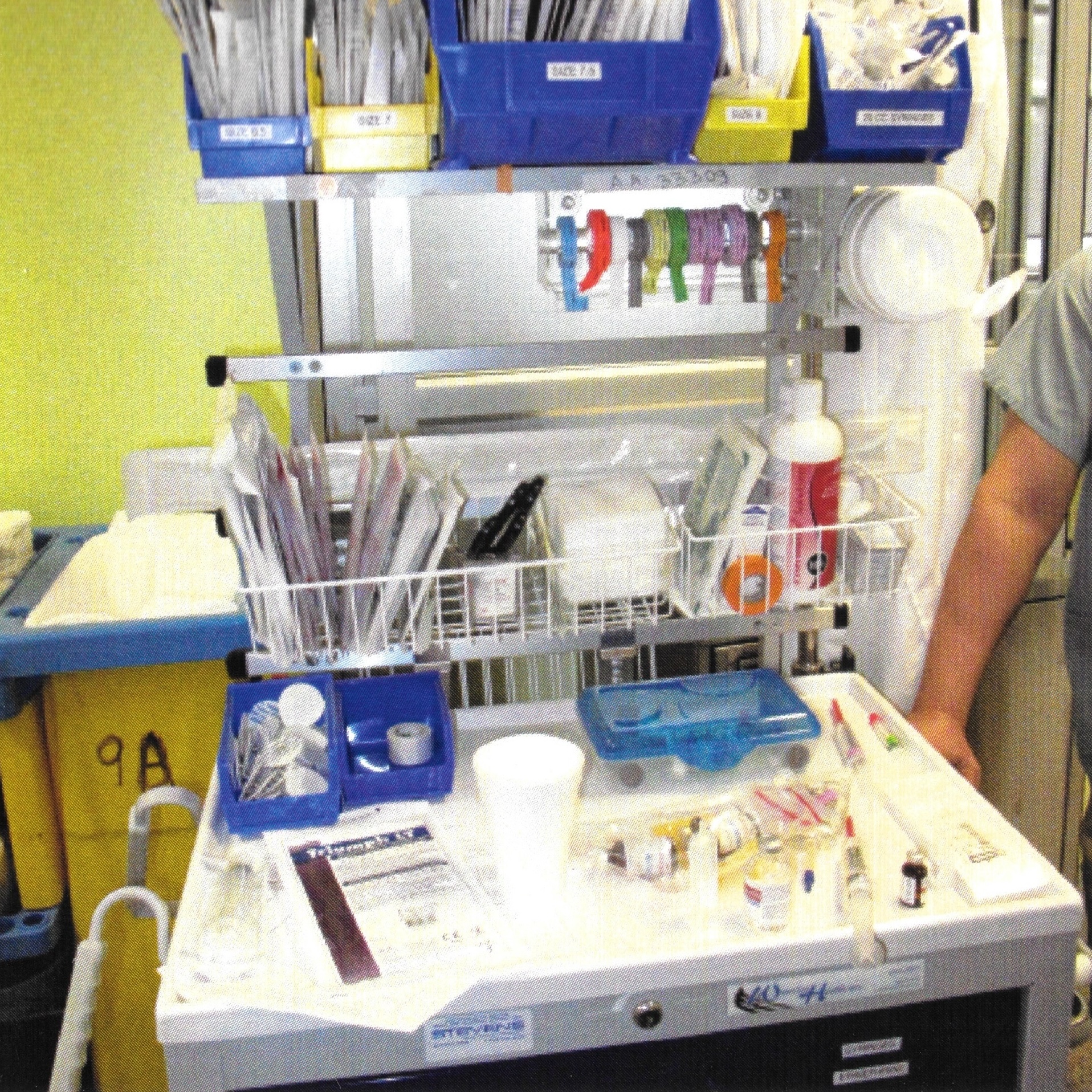
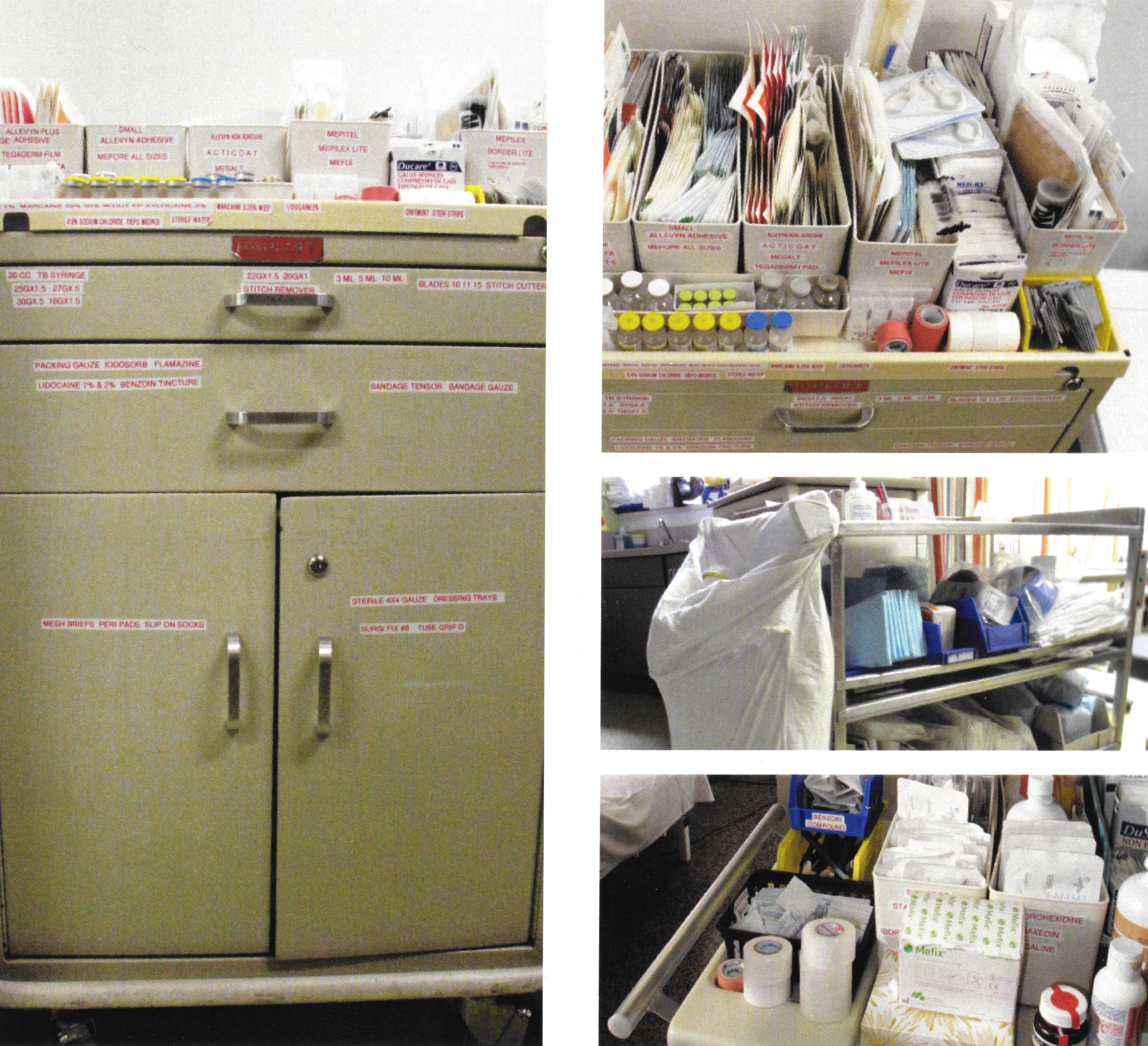
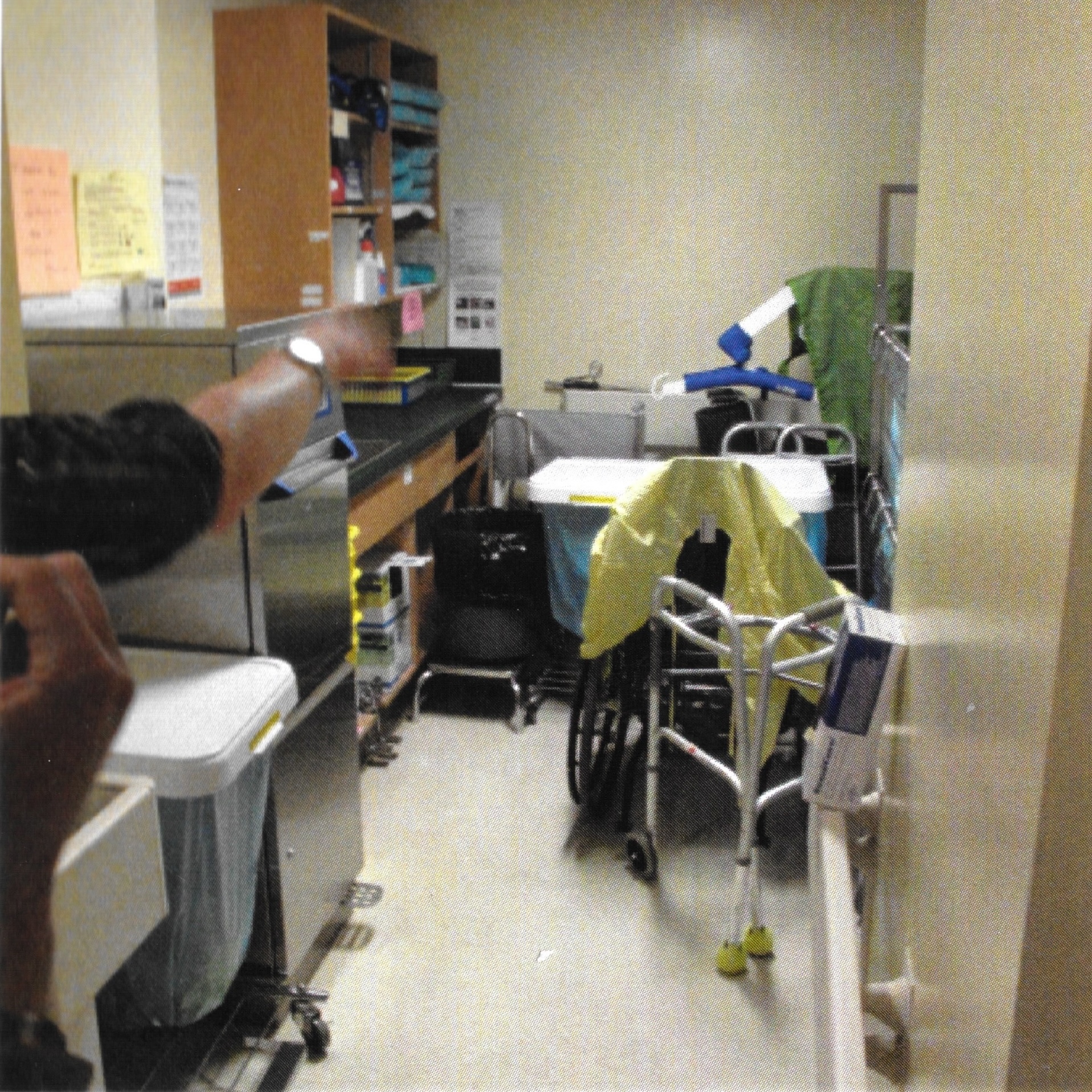
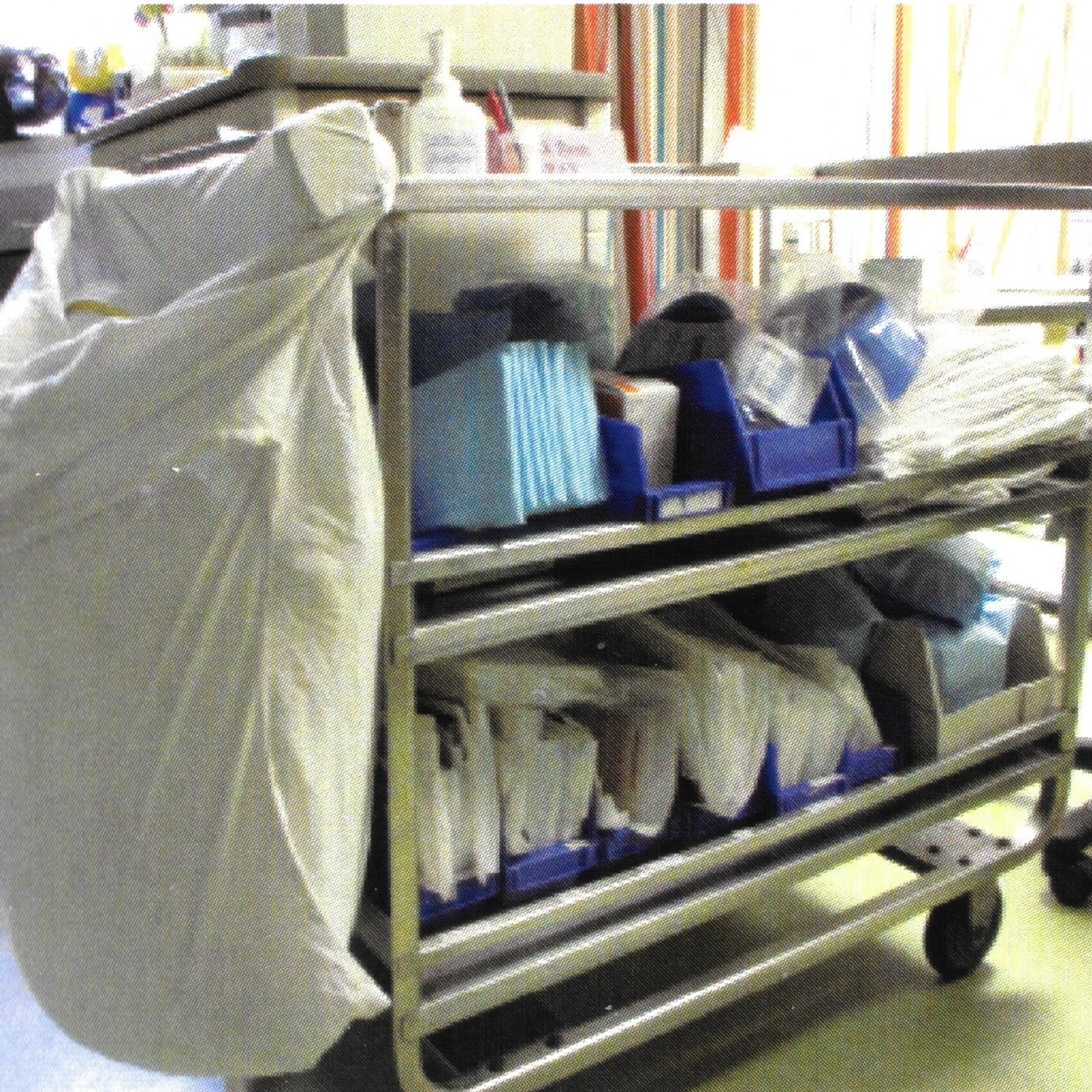
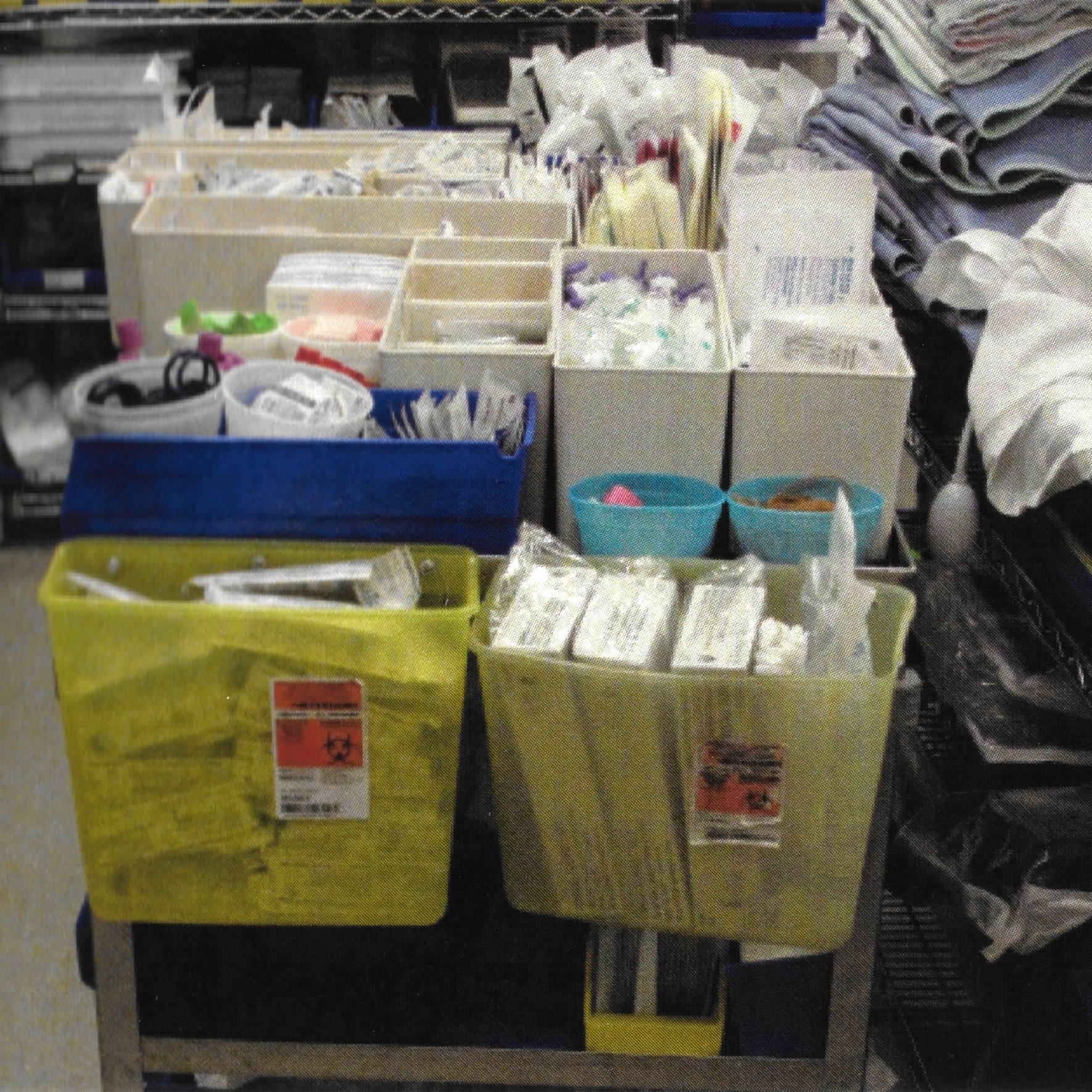
Carts lacked uniform labeling; manufacturers packaged supplies inconsistently, producing a disjointed visual language that forced staff to improvise within spatial constraints.
2. Distributed Supply Architecture
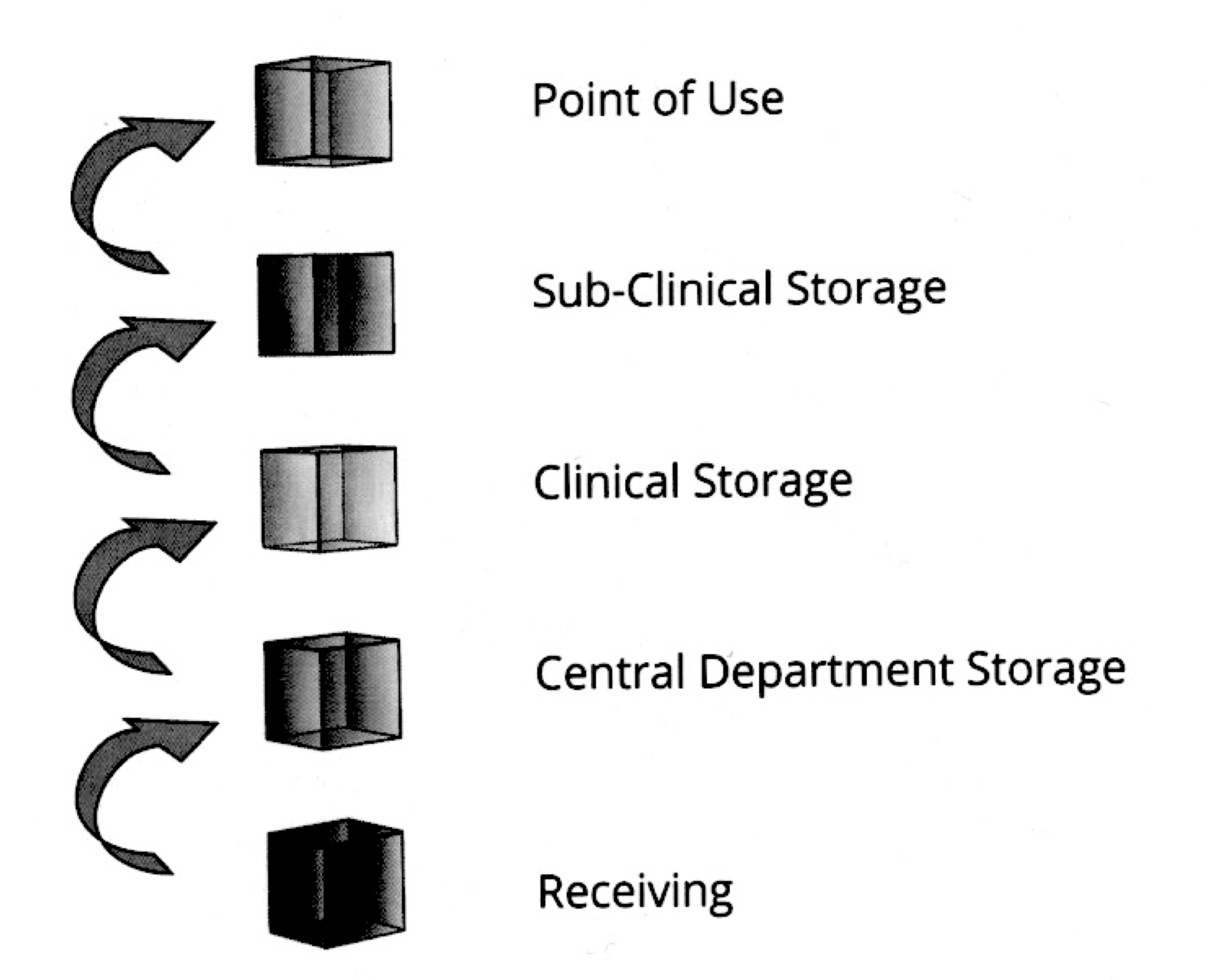
Supplies passed through five distinct resting points before reaching point-of-use:
Receiving → Central Department Storage → Clinical Storage → Sub-Clinical Storage → Exam Room
Each transfer introduced delay, variability, and accountability gaps.
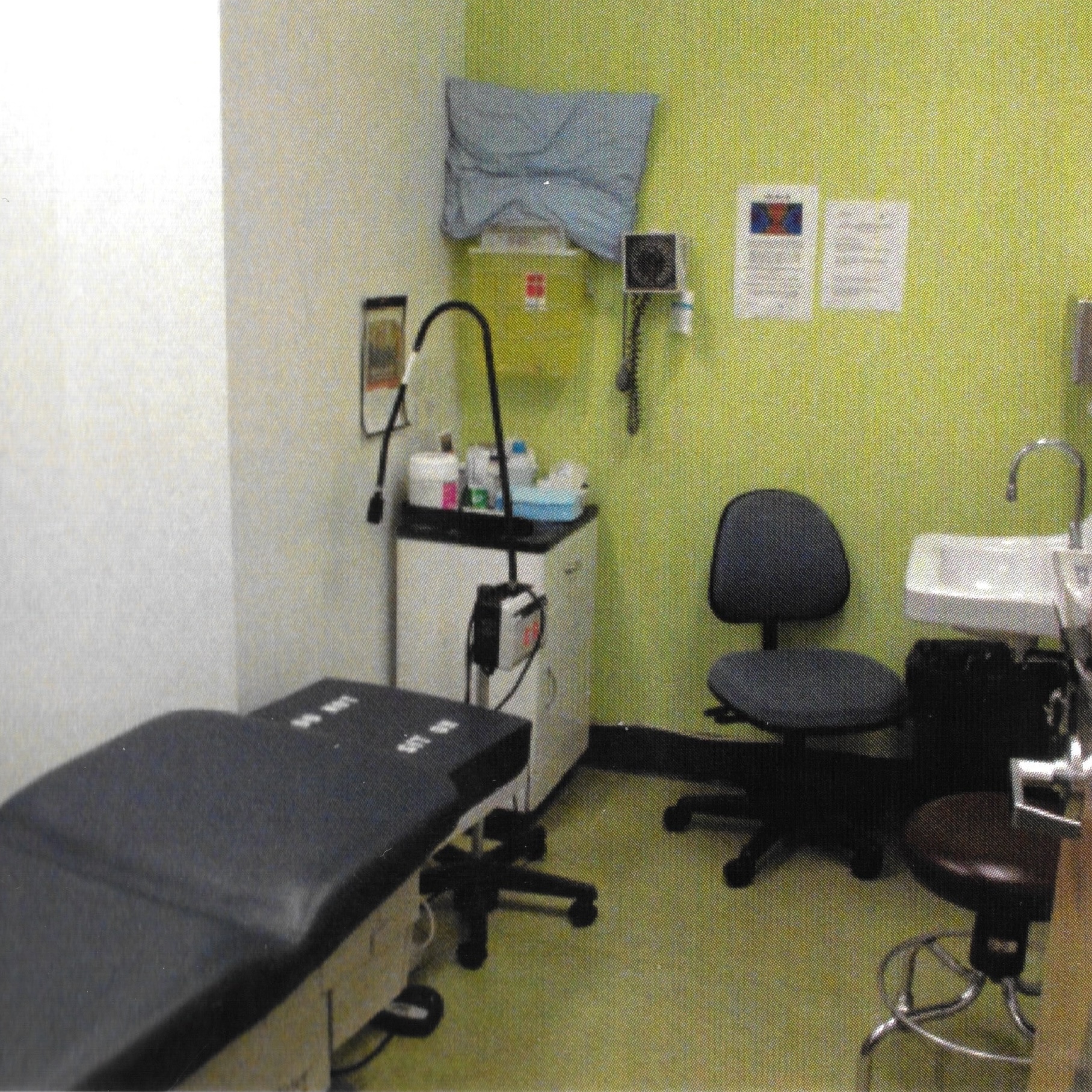
Each transfer introduced delay, variability, and accountability gaps. In exam rooms, this manifested as:
- Cluttered surfaces
- Improvised receptacles (garbage bags, sharps bins attached ad hoc)
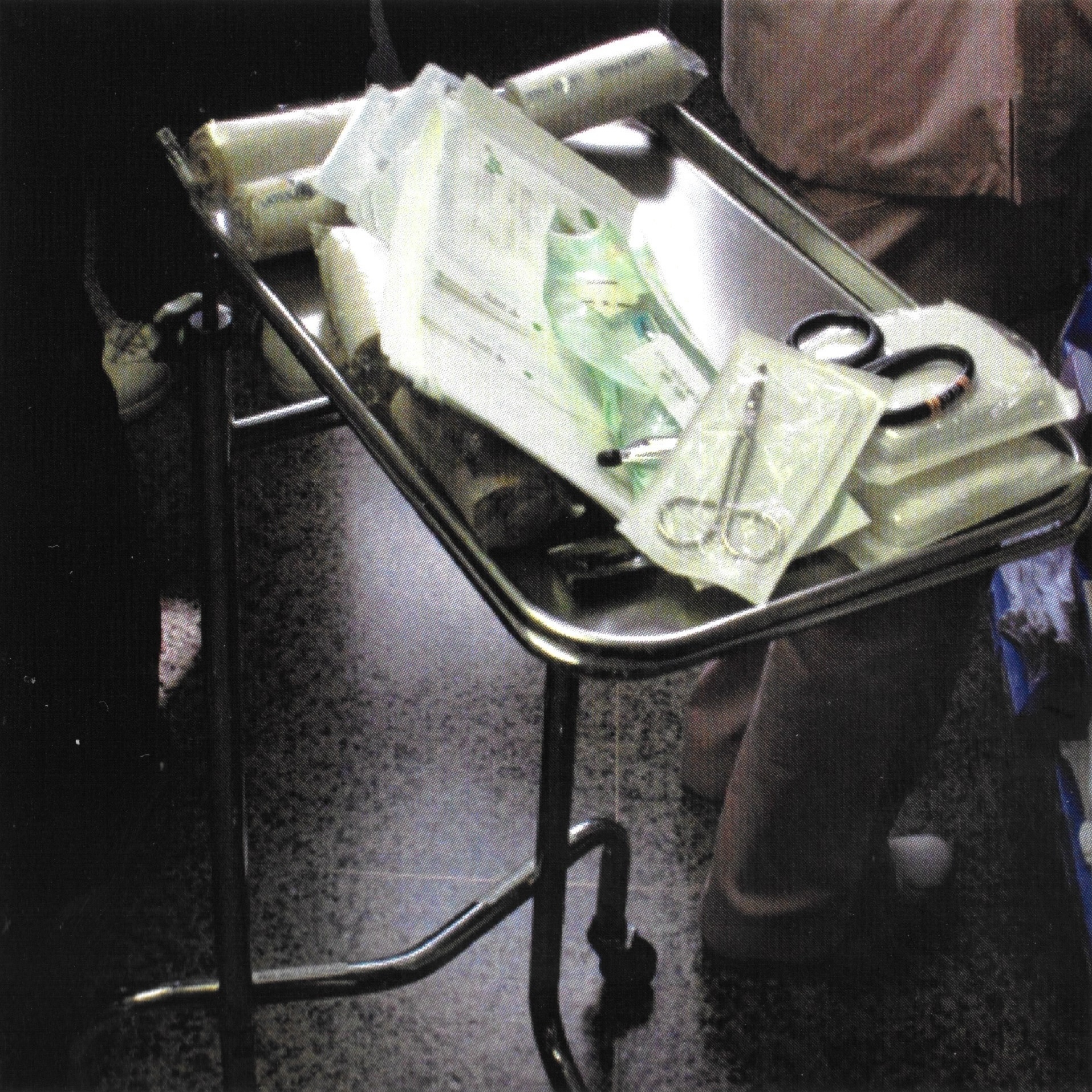
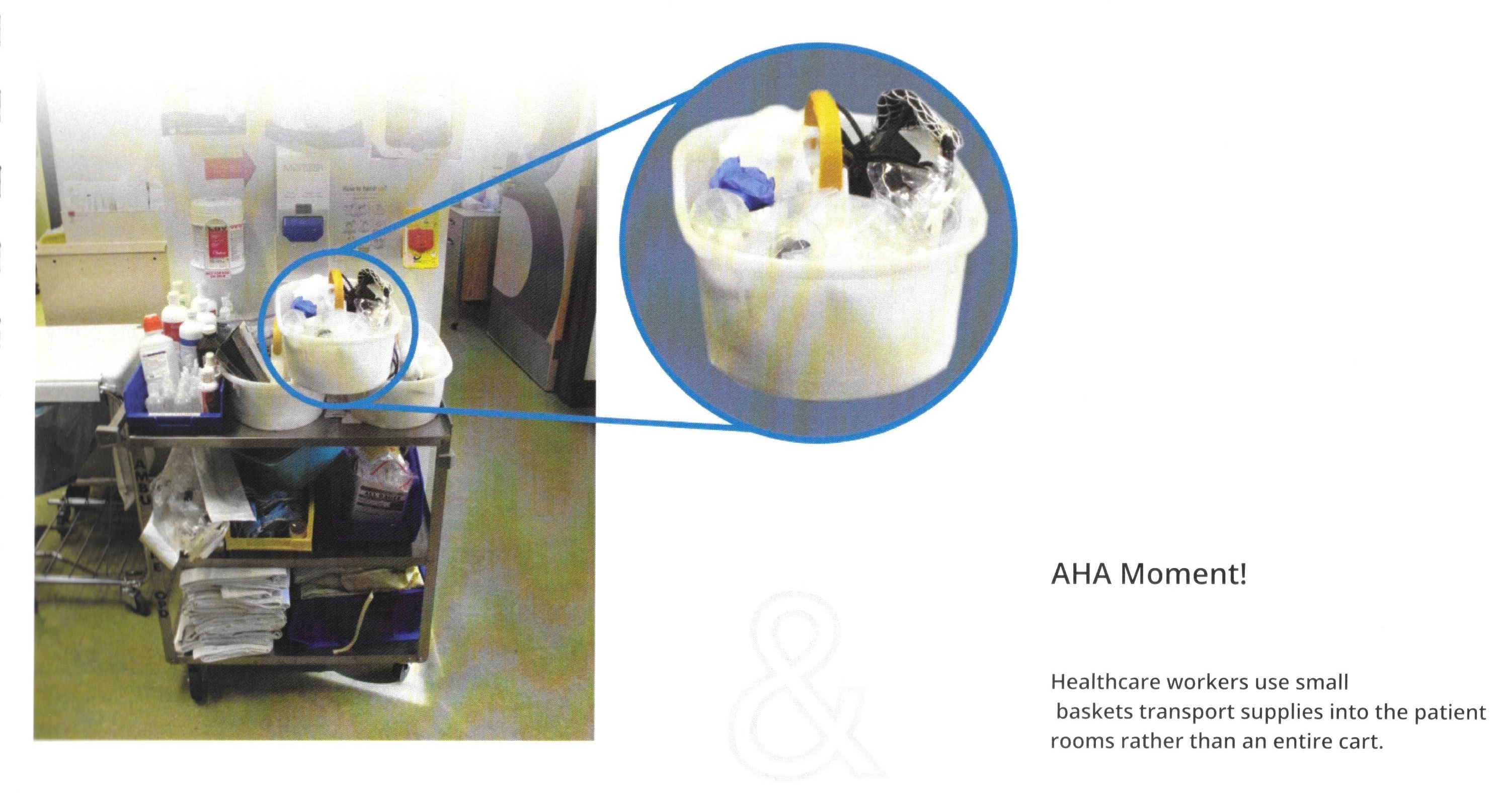
- Haphazard transport using small baskets
- Infection exposure risk
- Cleaning inefficiencies
Staff were compensating for systemic design failures.
Behavioral Insight (AHA Moment)
Healthcare workers routinely bypassed the cart
Instead of rolling the full unit into the exam room, they loaded small baskets or trays with only necessary supplies.
This behavior revealed:
- The cart was too bulky for the space
- The full inventory was unnecessary at point-of-use
- Cognitive load was reduced when supplies were pre-filtered
The challenge shifted from “better cart storage” to designing modular supply selection into the system itself.
Institutional Context
St. Paul’s Hospital had secured approximately $500M for redevelopment, including a new tower.
Providence Health Care had benchmarked Orbis Medical Center, observing automated guided vehicles (AGVs) and integrated materials handling systems.
The mandate was not incremental improvement — but systemic modernization.
This allowed exploration of:
- Centralized stock logic
- Modular procedure-based supply kits
- Automated cart transport
- Spatial integration with new architectural planning
System Reframe
The project moved beyond “cart redesign” into supply flow compression.
Proposed system flow:
- Stock divided and stored centrally
- Cart pre-stocked per scheduled procedures
- Non-procedure essentials (gloves, wipes) added separately
- Cart transported via automated guided vehicle
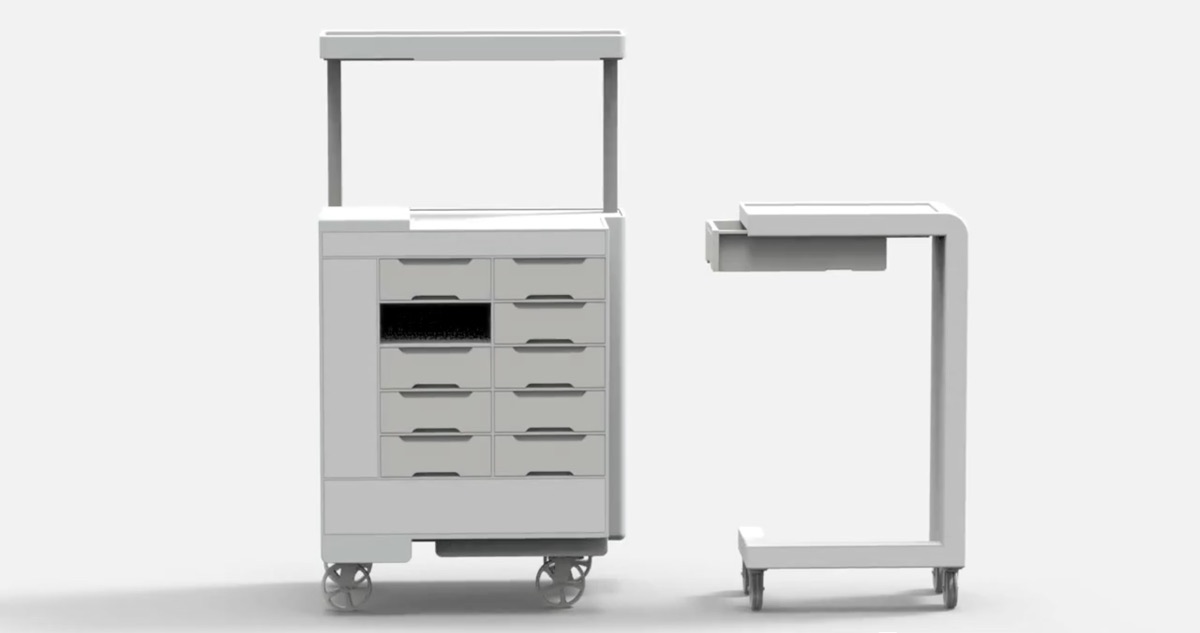
- At arrival, cart expands to expose waste/recycling receptacles
- Physician removes procedure-specific module and attaches it to over-bed table
- Extra supplies remain outside the room to reduce contamination
- Cart returns via AGV for central processing post-procedure
The cart became a mobile node within an automated supply ecosystem.
Design Objectives
- Standardize visual labeling and organizational logic
- Eliminate improvised side attachments by integrating receptacles
- Reduce manual handling between cart and room
- Minimize infection exposure through modular separation
- Streamline exterior geometry for cleaning efficiency
- Allow nesting and storage compression in tight exam rooms
- Support automated transport compatibility
- Align physical form with clinical workflow sequencing
The objective was structural simplification across physical, behavioral, and logistical layers.
Design Resolution
Operating Constraints
- Five-stage distributed supply chain
- Limited exam room square footage
- Infection control and contamination risk
- Improvised attachments
- Cleaning inefficiencies
- Automation integration requirement
- Multi-role stakeholder interaction
Modular Architecture
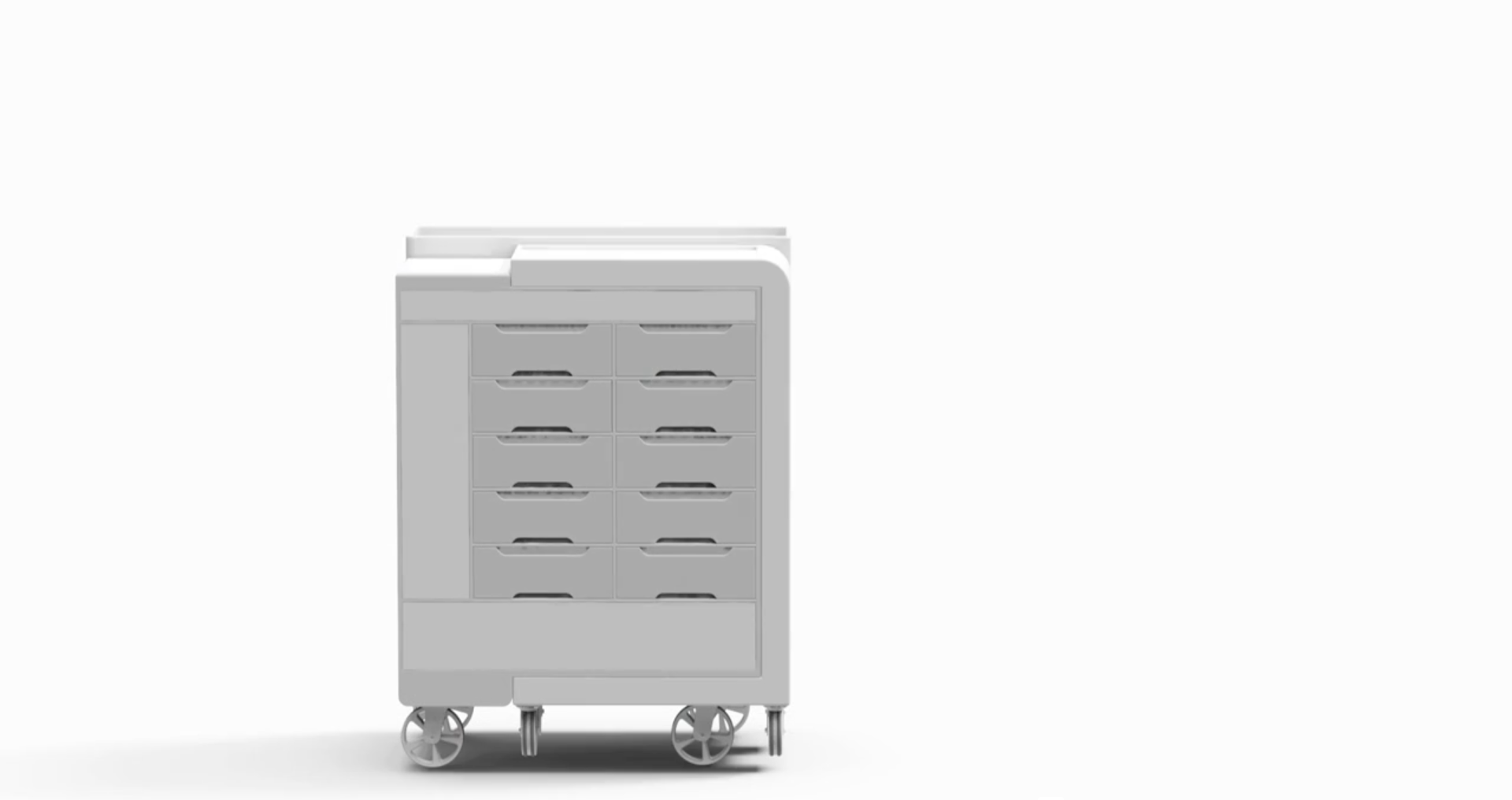
Procedure-specific modules detach from the main unit and integrate directly with the over-bed table.
Integrated Receptacles
Garbage and sharps containment incorporated into base design to eliminate ad hoc solutions.
Rising Shelf Logic
A controlled surface for essential, high-frequency items — limiting visual clutter and exposure, with an integrated task light to reduce shadows and improve readability.
Exterior Simplification
Reduced surface articulation for faster cleaning and maintenance.
Nesting Configuration
Unused components store compactly to reclaim floor area.

Sized for corridor transport, ergonomic standing use, and spatial efficiency.
System Impact
The project achieved:
- Compression of a five-stage supply chain into a controlled modular workflow
- Reduced manual handling and contamination exposure
- Elimination of improvised attachments
- Faster cleaning cycles
- Clearer visual hierarchy
- Alignment with automated hospital logistics
- Reduced cognitive load during clinical interaction
The cart evolved from storage furniture into:
- A clinical supply delivery system integrated with workflow, infection control, and institutional modernization.